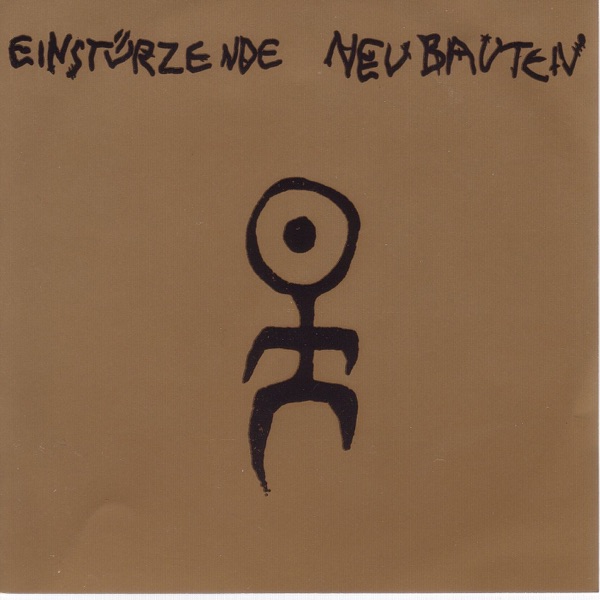
Einstürzende Neubauten
Biography
Einstürzende Neubauten, German for collapsing new buildings, is an experimental group formed in West Berlin in 1980. Its founding members Blixa Bargeld, who sings and plays guitar and keyboard, and N.U. Unruh, who plays custom-made instruments and percussion, are still in the band. Its first appearance was at the Moon Club in West Berlin on 1 April 1980. The name gained a new dimension on 21 May 1980, not two months after the band formed, when the roof of the Berlin Congress Hall collapsed.
The band's trademark is the use of custom-built instruments, predominantly made from scrap metal and building tools, alongside noises and standard instruments. The early albums, beginning with Kollaps in 1981, were unremittingly harsh, with Bargeld's vocals shouted and screamed above banging and scraping metal percussion. Halber Mensch (1985) was a developmental breakthrough, as Bargeld moved from shouted phrases toward organized, poetic melodies, and Tabula Rasa (1993) was a turning point toward softer music with more electronic sounds. Bargeld also played in Nick Cave and the Bad Seeds until 2003. In 2002 the band began work on a new album without a label, relying on a community of supporters, and it then cooperated with Mute Records to release Perpetuum Mobile in 2004. Alexander Hacke left in 2025.
Einstürzende Neubauten is regarded as an industrial pioneer for its harsh, noise-influenced sound. The band drew on the Krautrock of Can, Neu! and Kraftwerk, and it has been cited as an influence on Ministry, Swans, KMFDM and Crisis. Trent Reznor of Nine Inch Nails named the group a notable influence, and it has been cited as an influence on Depeche Mode's adoption of industrial elements on Construction Time Again. Alternative Press included it in a 1996 list of 100 underground inspirations of the past 20 years.
' /%3E%3C/svg%3E)