Philip Glass
Biography
Philip Glass, born in Baltimore in 1937, studied at the University of Chicago and the Juilliard School and then, on a Fulbright scholarship, with Nadia Boulanger in Paris from 1964 to 1966. In Paris he worked on a film score with Ravi Shankar and Alla Rakha, whose way of hearing rhythm in Indian music as entirely additive shaped his style; he renounced his earlier compositions and began writing from repetitive structures. After hearing Steve Reich's Piano Phase in New York in 1967 he turned to a radical consonant vocabulary. He formed the Philip Glass Ensemble, an amplified group of keyboards, wind instruments and soprano voices.
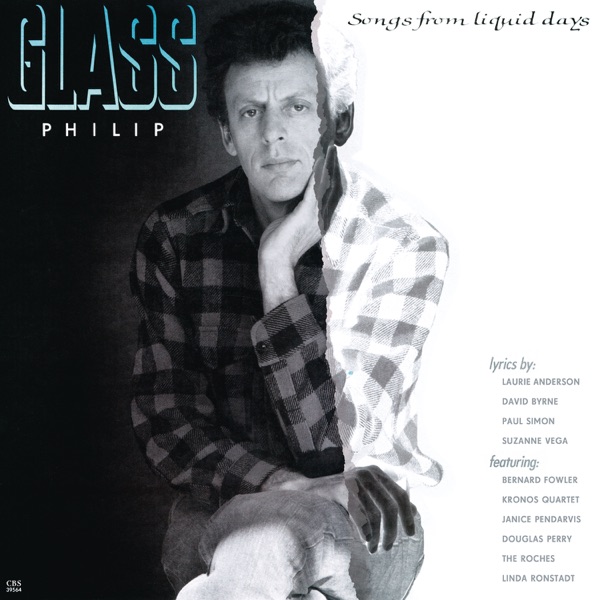
The four-hour Music in Twelve Parts (1971–1974) is the work up to which he accepts the label minimalist, excepting its last part, which he says was the end of minimalism; he now describes his music as music with repetitive structures. The operas Einstein on the Beach (1976, with Robert Wilson), Satyagraha (1980) and Akhnaten (1984, sung in Akkadian, Biblical Hebrew and Ancient Egyptian) followed, and the album Glassworks (1982) brought his music to a wider public. In the mid-1980s he wrote the song cycle Songs from Liquid Days, initiated by CBS Masterworks Records, with texts by songwriters such as David Byrne and Paul Simon.
Brian Eno and David Bowie were early admirers; Eno called an early encounter with the music one of the most extraordinary musical experiences of his life. In the 1990s Glass wrote the symphonies Low (1992) and Heroes (1996), thematically derived from Bowie and Eno's albums Low and Heroes, and his twelfth symphony (2019) is based on Bowie's Lodger. His influence extends to Mike Oldfield, who included parts of Glass's North Star in Platinum, and to Tangerine Dream and Talking Heads. With his sound designer Kurt Munkacsi he produced the band Polyrock.
' /%3E%3C/svg%3E)