
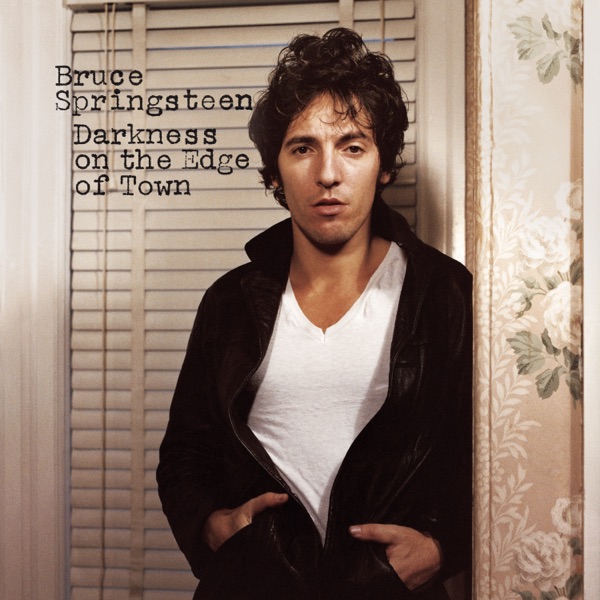
Why it's in the canon
Darkness on the Edge of Town stripped the Wall of Sound from Born to Run for a rawer hard-rock sound that put the whole band forward, and it moved Springsteen's writing from the Jersey Shore into the American heartland, among older, ill-fortuned characters fighting overwhelming odds. Rob Kirkpatrick said it left R&B behind for 1970s hard rock, and Michael Hann of The Quietus described it as heartland rock. Dave Marsh hailed it in Rolling Stone as a landmark that would one day stand with Are You Experienced, Astral Weeks and Who's Next. Reviewers have since seen in it the basis of Springsteen's songwriting for the next decade, foreshadowing Nebraska and The Ghost of Tom Joad.
Darkness on the Edge of Town has ten tracks. Springsteen wanted a leaner, angrier sound than Born to Run, favoured guitar solos, and limited Clarence Clemons's saxophone to three tracks. The choruses of Badlands, Prove It All Night and The Promised Land carry more weight than on earlier records, and the verses are more anthemic than poetic. Badlands is a loud, anthemic rock song about the determination to succeed against oppression. Adam Raised a Cain, a punk-influenced track, rides a heavy drumbeat and a riff played together by guitars, bass, piano and organ. Hann called Candy's Room, a drum-led piece, the album's most musically violent moment, and Racing in the Street and the title track begin on piano, with the other instruments joining as they go.
Springsteen sued his manager Mike Appel in July 1976, and the proceedings kept him out of a studio for almost a year. He began recording at Atlantic Studios in New York on 1 June 1977 with Jon Landau and the E Street Band, moved to the Record Plant in September, and finished after nine months. The sessions are reported to have produced between 50 and 70 songs. Only ten made the album, and he gave others away, among them Because the Night, which went to Patti Smith. Steven Van Zandt hated the final mix, saying it suffered from terrible production.
It came out on 2 June 1978 and reached number five in the US. The Los Angeles Times's Robert Hilburn found stronger production and a more consistent group of songs than on its predecessor, while Peter Silverton of Sounds heard little advance and only a fraction of the vitality. NME named it the best album of 1978, and Rolling Stone placed it second. Later critics have been divided: Colin Larkin called it anticlimactic and Gary Graff found the production criminally flat.
Basic Information
- Released
- 1978-06-02
- Canon Tier
- Canonical

