
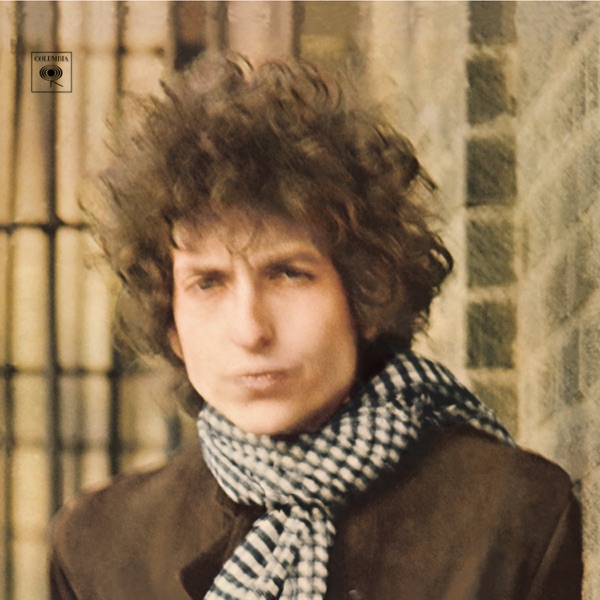
Why it's in the canon
Blonde on Blonde joined the expertise of Nashville session musicians to a modernist literary sensibility, on what Sean Wilentz called an oddly configured double album, the first of its kind in contemporary popular music. Mike Marqusee wrote that Dylan took inherited blues idioms into a modernist stratosphere, in songs he called allusive, repetitive and jaggedly abstract. Gary Graff names it with Highway 61 Revisited and the Beach Boys' Pet Sounds as a possible starting point of the album era. In 1974 the writers of NME voted it the second-best album of all time, and in 2016 the Swedish Academy's secretary Sara Danius, asked how to judge Dylan's literary merit, suggested listening first to it.
Blonde on Blonde opens with Rainy Day Women #12 & 35, which Andy Gill heard as a demented marching band staffed by crazy people out of their minds on loco-weed. The brass came about when the producer Bob Johnston said the song sounded like the damn Salvation Army band and Dylan asked him to get one. Pledging My Time is a Chicago blues-influenced track defined by Robbie Robertson's guitar, Hargus Pig Robbins's blues piano and Kenneth Buttrey's snare rolls. Sad Eyed Lady of the Lowlands runs 11 minutes 23 seconds and fills the whole of side four.
The New York sessions from October 1965 to January 1966 yielded only one track that reached the album, One of Us Must Know (Sooner or Later). At Johnston's suggestion Dylan, Al Kooper and Robertson moved to Columbia's studio in Nashville, where Johnston recruited session players including Charlie McCoy, Wayne Moss, Joe South and Buttrey and, at Dylan's request, removed the baffles between the musicians. Buttrey credited the sound of the album to that arrangement, as if the band were on a tight stage.
On 15 February the musicians played cards and napped until, at 4 am, Dylan called them in to record Sad Eyed Lady of the Lowlands. Visions of Johanna, which had taken 14 takes in New York, fell into place quickly in Nashville. Columbia released the album on 20 June 1966. It reached No. 9 on the US Top LPs chart and No. 3 in Britain, and Rainy Day Women #12 & 35 reached No. 2 on the Billboard singles chart.
Reviews were generally favorable. Paul Williams of Crawdaddy! called it a cache of emotion and a well handled package of excellent music and better poetry, and in Esquire in 1968 Robert Christgau said Dylan had presented his work at its most involuted, neurotic and pop, and exhilarating.
Basic Information
- Released
- 1966-06-20
- Canon Tier
- Canonical

