
Why it's in the canon
The Best of Leonard Cohen is a 1975 compilation that collects songs Cohen chose himself, after four albums of folk music, for a new generation of listeners. The music it holds belongs to a songwriter whom Bob Dylan called the number one songwriter of their time, with himself at number zero. AllMusic's Bruce Eder wrote that, second only to Dylan and perhaps Paul Simon, Cohen commands the attention of critics and younger musicians more firmly than any other 1960s figure who kept working into the 21st century. One of its songs, The Partisan, was regarded as the hymn of the Polish Solidarity movement when Cohen's band played it in Poland.
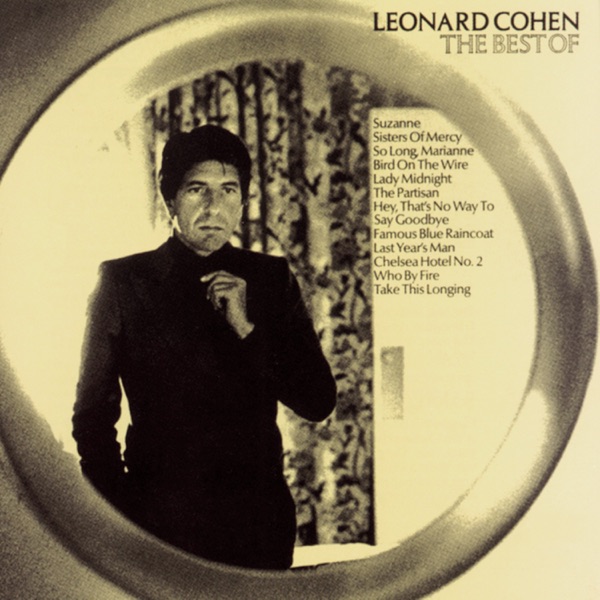
The Best of Leonard Cohen was released in 1975, and in some European countries it appeared as Greatest Hits, the title used for the original vinyl and for CD reissues from the 1980s onwards. Cohen took charge of the project: he picked the songs, designed the package and insisted that the lyrics be included. Four of its tracks, Lady Midnight, The Partisan, Last Year's Man and Take This Longing, were dropped when the album was re-released in England in 2009 and nine later songs took their places, among them Hallelujah, Everybody Knows and I'm Your Man.
The record was not a hit in the United States but did well in Europe, Cohen's major market at the time. In late 1975 he and the pianist and arranger John Lissauer played a short series of shows in the US and Canada with a new band in support of it, trying out songs from an album in progress, Songs for Rebecca, which was abandoned in 1976.
In 1976 he toured Europe with a new band and a changed sound, opening in Berlin on 22 April and finishing in London on 7 July, with 55 shows that included his first appearance at the Montreux Jazz Festival. During that tour he recorded Do I Have To Dance All Night at Musicland Studios, a funky, disco-infused song that was released as a single in Europe only.
The cover photograph was taken in 1968 in a Milan hotel room by a man Cohen's liner notes call Gino. The alternative rock band Ween based the cover of their 1991 album The Pod on it.
Basic Information
- Released
- 1975-01-01
- Canon Tier
- Canonical