Why it's in the canon
And Then Nothing Turned Itself Inside-Out is the record on which Yo La Tengo slowed down. Pitchfork's Philip Sherburne called it the quietest, coziest album of their career, suffused in lullaby-like close harmonies and cotton-candy 1960s flashbacks, and it carries vibraphone, drum machines and guitars and bass with a strong undertone of reverberation. It was the band's first album to reach the Billboard 200. Pitchfork ranked it fifth on its 2018 list of the 30 best dream pop albums, and the Guardian placed it 82nd on its 2019 list of the 100 best albums of the 21st century.
And Then Nothing Turned Itself Inside-Out is built from soft ballads with very airy percussion and background noises. The guitars and bass carry a strong undertone of reverberation, and backing instruments such as vibraphone and drum machines widen the range of timbre. The band takes a greatly slower approach to songwriting and delivers more subdued art pop songs here than on any other album. Their noise rock influence is also most present in Saturday, Cherry Chapstick, Tired Hippo and the 17-minute Night Falls on Hoboken. Everyday adds slide guitar.
Some of the songs borrow from elsewhere. You Can Have It All is a cover of the George McCrae song written by Harry Wayne Casey of KC and the Sunshine Band, played at a much slower tempo and in a distinctly different style. The Crying of Lot G refers to Thomas Pynchon's novel The Crying of Lot 49. Let's Save Tony Orlando's House takes its title from the Simpsons episode Marge on the Lam, in which it is the name of a telethon that Troy McClure previously hosted.
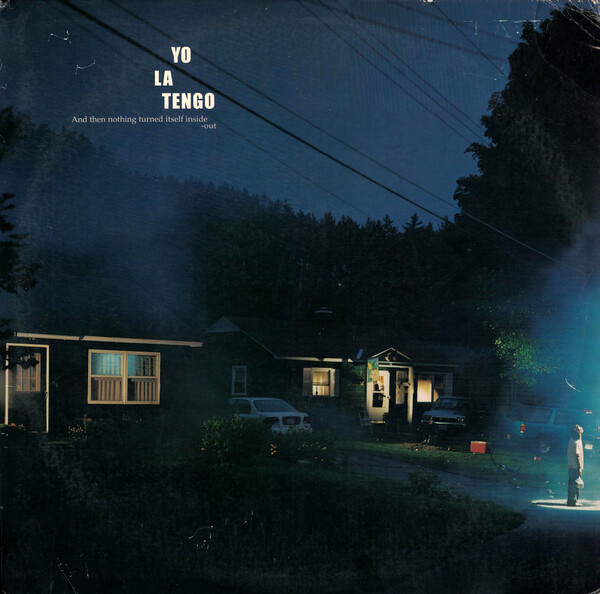
Matador released the ninth studio album on 22 February 2000. Roger Moutenot produced it, and it was recorded at Alex the Great in Nashville and mixed at the Big House in Manhattan. Susie Ibarra plays percussion on two tracks, Kris Gillespie programs drums on one, and David Henry and Tim Harris play cello. The title probably comes from a Sun Ra quotation: at first there was nothing, then nothing turned itself inside-out and became something. The artwork is by Gregory Crewdson, credited with photography.
AllMusic's Heather Phares wrote that the album is not as immediate as some of the group's earlier work but just as enduring, proof that Yo La Tengo is the perfect band to grow old with. It placed eighth in The Village Voice's Pazz & Jop poll for 2000 and sold 114,000 copies in the US by January 2003.
Basic Information
- Released
- 2000-02-22
- Canon Tier
- Landmark
' /%3E%3C/svg%3E)