Why it's in the canon
The Shape of Jazz to Come kept the outline of bebop, a theme, then solos, then the theme again, and removed the chord structures beneath it. The quartet had no piano or guitar, and its improvisations followed melody instead of harmony. The album was a breakthrough that helped to establish the free jazz movement and laid the foundation on which much subsequent avant-garde and free jazz would be built. The critic Steve Huey called it a watershed event in the genesis of avant-garde jazz, and Jazzwise placed it third on its 2017 list of the 100 best jazz albums of all time. At the Five Spot residency that followed, Charles Mingus likened the music to organized disorganization.
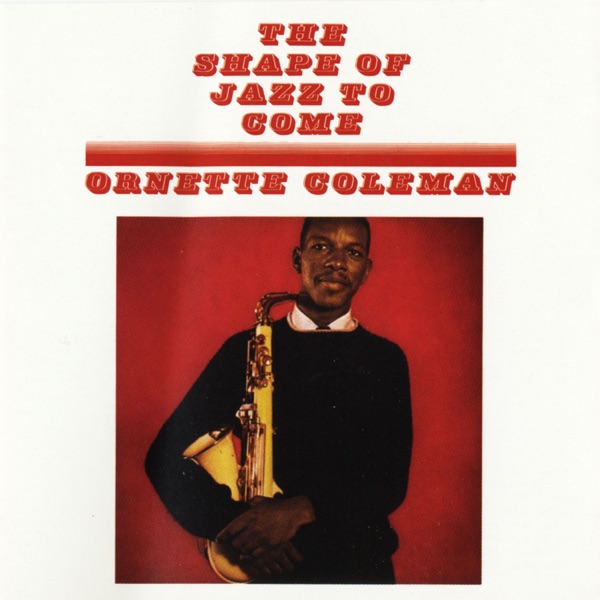
The Shape of Jazz to Come was recorded on 22 May 1959 at Radio Recorders in Hollywood and released by Atlantic that November. It was Coleman's third album and the first with the quartet of himself on alto saxophone, Don Cherry on cornet, Charlie Haden on bass and Billy Higgins on drums. Without a chordal instrument, each piece states a brief theme, runs several minutes of free improvisation and comes back to the theme. Coleman played a plastic Grafton saxophone, which added to the harshness of his tone, and his use of microtonal intervals was central to his sound.
Lonely Woman became one of the few Coleman compositions to reach standard status. In Fred Kaplan's account it opens with Haden playing a slow bass dirge, Higgins adding a fast drum riff, and Coleman and Cherry stating a sorrowful melody in unison, bending notes and wailing. Coleman's solo wanders away from the theme and improvises on other aspects of the song, especially its emotion, before the group returns to the theme. He wrote the piece after seeing a photograph in a Los Angeles gallery of a woman who was sad in the midst of wealth.
Pianist John Lewis of the Modern Jazz Quartet had secured Coleman the Atlantic contract. Coleman wanted to call the record Focus on Sanity, after its fourth track, and the producer Nesuhi Ertegun suggested the final title to give buyers an idea of the uniqueness of the LP.
The quartet began a residency at the Five Spot Café on 17 November 1959, planned for two weeks and extended to two and a half months. It divided listeners, and Miles Davis was unimpressed. Rolling Stone ranked the album 246th in 2003 and 417th in 2020, and the Penguin Guide to Jazz awarded it a crown.
Basic Information
- Released
- 1959
- Canon Tier
- Pinnacle
' /%3E%3C/svg%3E)