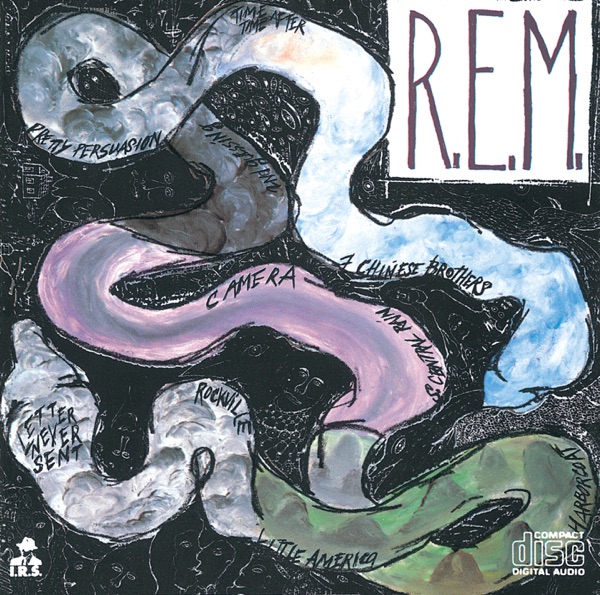
Why it's in the canon
Reckoning was recorded to sound like R.E.M. live. Mitch Easter and Don Dixon used binaural recording on several tracks, which let Mike Mills's backing vocals sit loud without obscuring Michael Stipe. Rolling Stone's Christopher Connelly heard a crisper sound and far more comprehensible lyrics than on the debut.
The audience for it was American college radio, where the album went to number one on the airplay charts. It peaked at number 27 on the Billboard 200, a placing that was unusually high for a college rock band at the time, and Joe Sasfy of The Washington Post wrote that there was no American band worth following more than R.E.M.
Reckoning, released on 9 April 1984, sounds more direct than its predecessor. Biographer David Buckley wrote that the music moved away from Murmur's slightly airless feel while the subject matter turned a little darker. Rolling Stone's Christopher Connelly counted Peter Buck's ceaselessly inventive strumming, Mike Mills's exceptional bass playing and Michael Stipe's evocatively gloomy baritone among the strengths that stayed unchanged. By the time recording began, the producer Don Dixon said, the group wanted to rock out a bit more, and Mitch Easter thought the binaural set-up made Bill Berry's drum parts fresher sounding.
Water imagery recurs in the lyrics, as Buck noted in 1988. Camera addresses the death of a friend from Athens in a car crash; Easter said Stipe's vocal was so exposed that it showed every technical imperfection of pitch, and Stipe, intent on the feeling of the song, refused at one point to record further. During 7 Chinese Bros. Stipe sang so quietly that Dixon could not hear him on the tape, so Dixon handed him a gospel record, and Stipe began reciting its liner notes; that recitation was released as Voice of Harold. (Don't Go Back To) Rockville was rearranged with a country rock influence, as a tribute to the band's legal advisor Bertis Downs, a country fan.
The band was writing two good songs a week, Buck recalled, and had recorded 22 songs with the producer Elliot Mazer in November 1983 before choosing Easter and Dixon again. Sessions began on 8 December 1983 at Reflection Sound in Charlotte in two eight-day stretches.
Connelly gave it four stars out of five but wrote that Stipe's erratic meanderings would prevent R.E.M. from transcending cult status. NME's Mat Snow called it another classic, and it placed seventh in NME's critics' poll and sixth in The Village Voice's Pazz & Jop poll. So. Central Rain (I'm Sorry) reached number 85 on the Hot 100.
Basic Information
- Released
- 1984-04-09
- Canon Tier
- Pinnacle
' /%3E%3C/svg%3E)