Why it's in the canon
Automatic for the People was in production while Out of Time was still climbing the charts, and it is a record of ballads about loss, mortality and the passage of time, set to orchestral strings arranged by John Paul Jones. Time's Guy Garcia wrote that it proves a so-called alternative band can keep its edge after conquering the musical mainstream.
R.E.M. scaled back its live appearances even further than for the previous album and did not tour at all, and the record still reached number one in the UK and number two in the US. Colin Larkin's All Time Top 1000 Albums voted it number 6 in 2000, and Rolling Stone gave it five stars on release.
Automatic for the People moves at a slow pace. Michael Stipe described the demos as very mid-tempo, more acoustic, more organ-based and with less drums, and the critic David Fricke counted only three rockers on the finished record: Ignoreland, The Sidewinder Sleeps Tonite and Man on the Moon. During rehearsals the members traded instruments, with Peter Buck on mandolin, Mike Mills on piano or organ and Bill Berry on bass. John Paul Jones arranged strings for four songs, played by fourteen classical musicians, eleven of them from the Atlanta Symphony Orchestra. Producer Scott Litt said the aim was to scale down the orchestral approach of Out of Time and make it more intimate.
Stipe said the whole album references the 1970s: Drive is an homage to David Essex's Rock On and its early glam production, and Everybody Hurts was inspired by Nazareth's cover of Love Hurts. Try Not to Breathe is about Stipe's grandmother dying and has Buck on dulcimer. Monty Got a Raw Deal, inspired by the life of the actor Montgomery Clift, is unique for featuring Buck on bouzouki. Buck tied the themes of loss and mourning to turning thirty and to the disappearance of the world of Hüsker Dü and The Replacements.
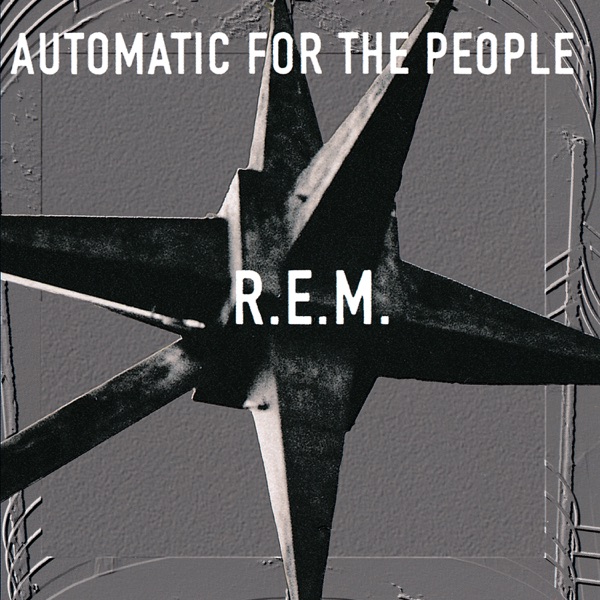
The band made the finished recordings with Litt at Bearsville Studios in Woodstock, New York, starting on 30 March, and mixed the album in Seattle. The title is the motto of the Athens eatery Weaver D's Delicious Fine Foods. The cover photograph shows a star from the sign of the Sinbad Motel in Miami, near the studio where most of the album was recorded.
Rolling Stone's Paul Evans found most of it musically irresistible despite its difficult concerns. Ann Powers wrote in The New York Times that only Man on the Moon shines with a wit that balances the band's somber tendencies. The album yielded six singles.
Basic Information
- Released
- 1992-10-05
- Canon Tier
- Pinnacle
' /%3E%3C/svg%3E)