Why it's in the canon
Too Dark Park answered an industrial scene drifting toward the mainstream with a harder record. Vice's Gigen Mammoser called it the rejection of a genre headed increasingly towards mainstream acceptance, and Metal Hammer, which placed it on both its list of the ten best industrial metal albums and its list of the ten best industrial albums, heard dance-floor beats and raw screaming noise as the antithesis of the techno scene. After the Ministry-inspired direction of Rabies it went back to a more chaotic electronic sound. Kerrang!'s Daniel Lukes called it controlled chaos at its most unsettling, and AllMusic's Alex Henderson gave it four and a half stars.
Too Dark Park uses guitar throughout, but the sound is electronic and chaotic, a step back from the Ministry-inspired direction of the band's previous album. AllMusic's Alex Henderson found it forceful, consistently abrasive and danceable, and approved of its twisted sampling, distorted synthesizer work and use of guitar. Trouser Press likened the gloom of Nature's Revenge and Morpheus Laughing to new wave acts such as Joy Division and Gary Numan, and Q's Martin Aston wrote of fury and frustration matched by relentlessly crushing beats.
Samples come from horror films, television and documentaries. Convulsion opens with sound effects from the anime Legend of the Overfiend and carries samples from the 1967 documentary LSD-25. Shore Lined Poison samples the 1967 film The Trip, Tormentor a line from From the Hip, and Morpheus Laughing a Bruce Willis line from a Wayne's World sketch on Saturday Night Live. The songs deal with environmental destruction and the self-destruction of humanity, and with Nivek Ogre's dealings with heroin.
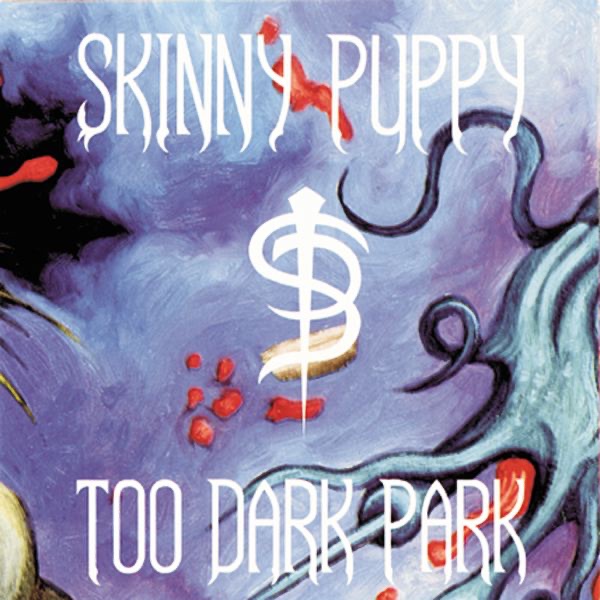
The band came to the record after the side projects that followed Rabies, when talk had spread that it had split up. Dwayne Goettel said the aim was to reassess everything about Skinny Puppy, and cEvin Key described the album as the follow-up to the last pure Puppy album, VIVIsectVI. It was recorded spontaneously at Mushroom Studios in Vancouver, mixed at Little Mountain Sound Studios, and produced by Key and Dave Ogilvie. Released on 30 October 1990, it carried the first appearance of the band's SP logo on a cover by Jim Cummins inspired by cosmic horror stories.
Spin's Staci Bonner called it the band's return to the bloodbath. Chicago Tribune's Mitchell May gave it two stars out of four, writing that the band openly defy the listener to like them, and Billboard found little that more accessible groups such as Ministry did not offer.
Basic Information
- Released
- 1990-10-30
- Canon Tier
- Pinnacle
' /%3E%3C/svg%3E)