Why it's in the canon
The Process is the last record of the original Skinny Puppy: it was the band's final album before the 2000 reunion, and Dave Ogilvie and cEvin Key mixed it after Dwayne Goettel's death from a heroin overdose in August 1995. It sets aside the treated vocals of the earlier albums for untreated singing, guitar and more accessible song structures. According to Key, American Recordings pressured the band into adopting a commercial industrial metal sound similar to Nine Inch Nails. Kerrang!'s Daniel Lukes called it the most poignant, elegiac and human album of their career.
The Process was built, in the band's words, as audio sculpture: synthesizers, drum machines, acoustic percussion, tape loops, samplers and conventional rock instruments layered together, with horror-film and radio samples that clarify or obscure the meaning of a song. Unlike earlier Skinny Puppy albums it has untreated vocals, guitar and more accessible structures. Tape exchange had brought the band the music of Suicide, Cabaret Voltaire, Chrome, Throbbing Gristle, Nocturnal Emissions, Portion Control and The Legendary Pink Dots, and the record was inspired by them. Blue Serge was one of Key's first experiments with a modular synthesizer, and Jahya was the first song recorded and the only one made at Mushroom Studios.
It was meant as a concept album about the Process Church of the Final Judgement, a 1960s psychotherapy cult that Genesis P-Orridge introduced to Nivek Ogre. The lyrics take in animal rights, environmental degradation, drug addiction, suicide, war, privacy and self-determination.
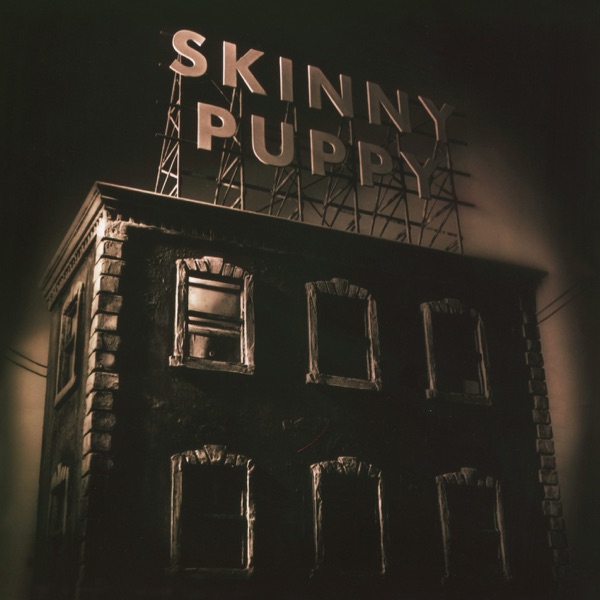
American Recordings released it on 27 February 1996, after sessions in Malibu broken up by fires, floods and the Northridge earthquake. The producer changed from Roli Mosimann to Martin Atkins to Dave Ogilvie. Bickering and drug use made the sessions so long and costly that the label cut the contract from three albums to one. Ogre left on 12 June 1995 and Goettel died on 23 August 1995, and the album is dedicated to him. The liner notes close with the words The End, and Steven R. Gilmore's sepia cover of a building with one lit window was made in memory of Goettel and his wife.
Reviews were generally mixed. AllMusic's Steve Huey said the album failed to convey its concepts but that its confusion in its own way speaks volumes, and NME's John Perry thought it would have been better if they had not bothered. The Los Angeles Times's Sandy Masuo found it full of intriguing vagaries and called Candle a suitably moody swan song.
Basic Information
- Released
- 1996-02-27
- Canon Tier
- Landmark
' /%3E%3C/svg%3E)