Why it's in the canon
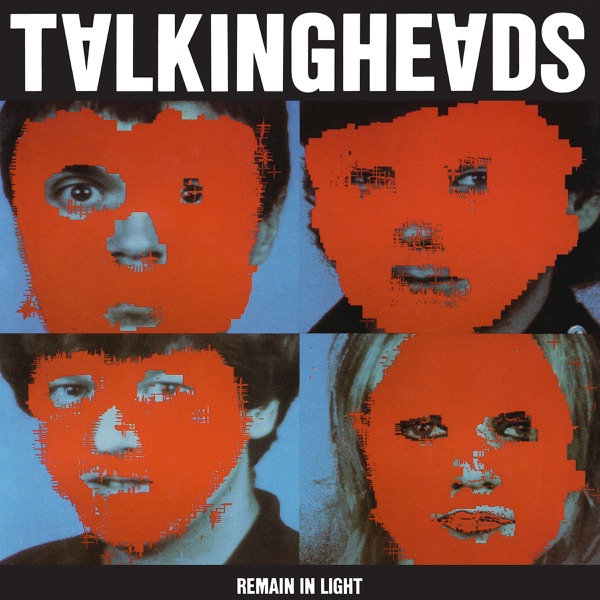
Remain in Light rebuilt the rock band around looping grooves that the players performed themselves: the basic tracks were long single-chord loops of rhythm, and songs were made by positioning or merging them. Byrne likened the process to sampling and said the band were human samplers. Radiohead credited the album as an influence on Kid A, and Jonny Greenwood took from it that the parts were played repetitively rather than looped, so each pass differs slightly. Slant's Barry Walsh wrote that the band turned rock into a more global entity in musical and lyrical scope, and in 2018 Angélique Kidjo recorded a song-for-song cover. Rolling Stone ranked it fourth among the albums of the 1980s in 1989, and Pitchfork second in 2002.
Remain in Light, released by Sire on 8 October 1980, holds eight songs that Stephen Thomas Erlewine called a dense amalgam of African percussion, funk bass and keyboards, pop songs and electronics. None of them uses chord changes; each rests on pedal points, with different harmonies and counter-melodies, spidery riffs and layered bass and percussion on top. Eno produced, and the band recorded at Compass Point Studios in the Bahamas and Sigma Sound in New York in July and August 1980.
Born Under Punches (The Heat Goes On), the album opener, carries an unorthodox guitar solo that is often credited to Adrian Belew but was played by Byrne through a Lexicon Prime Time delay. The Great Curve carries extended Belew solos, shaped with four effects units, and a line about the world moving on a woman's hips that Byrne took from Robert Farris Thompson's book African Art in Motion. The rhythmical rant of Crosseyed and Painless was influenced by Kurtis Blow's The Breaks. Once in a Lifetime began as one riff before the band added a second, and Eno alternated eight bars of each.
Byrne wrote the lyrics after the Bahamas sessions, working from scat improvisations recorded over rough mixes. Jerry Harrison said the band's aim was to blend rock and African genres, not to imitate African music, and Byrne later said the record held less Africanism than the band had implied. The press kit carried a bibliography of books on African music; Tina Weymouth said she had not read them.
Ken Tucker of Rolling Stone wrote that it yields scary, funny music to which you can dance and think, and Robert Christgau heard a visionary Afrofunk synthesis. Eno judged the music too dense for a quartet to play live, so the band toured as nine musicians, among them Belew and Bernie Worrell. The album reached number 19 on the Billboard 200 and has sold over one million copies worldwide.
Basic Information
- Released
- 1980-10-08
- Canon Tier
- Pinnacle
' /%3E%3C/svg%3E)