Why it's in the canon
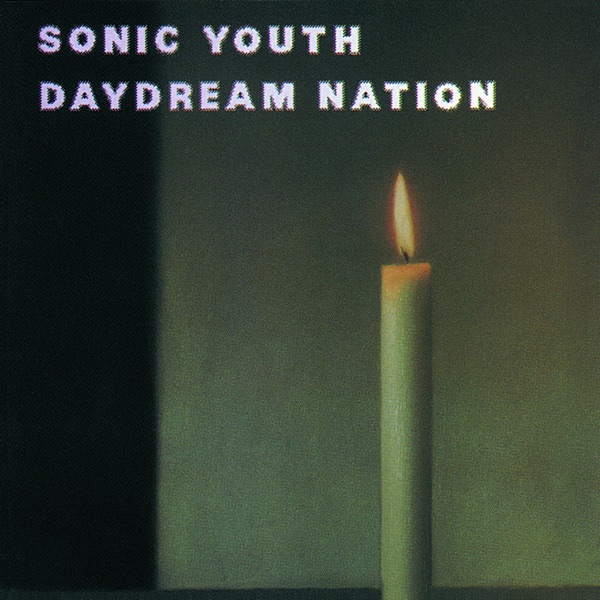
Daydream Nation carried the long improvisations of Sonic Youth's live shows onto record, as a double album whose songs often end in extended instrumental sections. Pitchfork's Amy Phillips wrote in 2018 that never before or after would this band, or any other, synthesize the urgency of punk, the abrasion of noise and the beauty of pop into so monumental a whole. Matthew Stearns, who wrote the 33⅓ volume on the record, places it with Hüsker Dü's Zen Arcade and Minutemen's Double Nickels on the Dime as a marker of the possibilities of American underground rock. PopMatters' Adrien Begrand judged it as seismic in influence as Nirvana's Nevermind.
Daydream Nation combines long improvisations, excursions into noise and faster, poppier melodies, played in unorthodox guitar tunings. The opener Teen Age Riot is one of the band's most popular songs, and the album closes with Eliminator Jr., the last part of the three-song suite Trilogy. The lyrics take in burnout, the music industry and the crack epidemic of the late 1980s.
The Sprawl takes its title from William Gibson's Sprawl trilogy, and Hey Joni, sung by Lee Ranaldo, is a tribute to Joni Mitchell. 'Cross the Breeze holds some of Kim Gordon's most intense singing. Providence is built from a piano solo Thurston Moore recorded on a Walkman at his mother's house, the sound of an overheating Peavey Roadmaster amplifier and two telephone messages Mike Watt left from a payphone in Providence, Rhode Island.
Enigma released the album on 18 October 1988. The band recorded it at Greene St. Recording in Manhattan over three weeks from mid-July, after a months-long writing process that produced improvisations lasting over half an hour. The engineer, Nick Sansano, was used to working with hip-hop artists and played the band his work on Public Enemy's Black Steel in the Hour of Chaos. The record cost $30,000, which led Moore to call it the band's first non-econo record.
Teen Age Riot reached No. 20 on Billboard's new Modern Rock Tracks chart, although the album did not chart in the United States and reached No. 99 in Britain. NME gave it ten out of ten and called it the most radical and political album of the year, and Robert Christgau gave it an A in The Village Voice. It came second in the Pazz & Jop poll, and CMJ put it first in its year-end list. Pitchfork ranked it first among the albums of the 1980s in 2002 and seventh in 2018. Chuck Eddy dissented, calling most of it watery wallpaper.
Basic Information
- Released
- 1988-10-18
- Canon Tier
- Pinnacle
' /%3E%3C/svg%3E)