Why it's in the canon
Goo was Sonic Youth's major-label debut, and Rolling Stone's David Fricke heard in it an essay in refined primitivism that reconciles rock's structural conventions with violent tonal elasticity and garage-punk holocaust. Alec Foege called it radical, even defiant, by 1990 major-label standards. Its lead single Kool Thing, with Chuck D of Public Enemy, reached No. 7 on the Billboard Modern Rock Tracks chart, and the album peaked at No. 96 on the Billboard 200, the band's highest position to that date. Writing for Tidal, Jakob Matzen called it a crucial piece of the puzzle in how Nirvana and other alternative artists brought the underground to the mainstream.
Goo builds its songs from layered guitar arrangements and sound collage. The production draws on musique concrète: Mildred Pierce, taken from an eight-minute demo, is a three-chord vamp over which Thurston Moore repeatedly shouts the title, and Scooter + Jinx is built from the screech of Moore's amplifier, which overheated and exploded during a session. Vocals on Mary-Christ run through different distortion devices.
Kim Gordon's role as vocalist and songwriter grew on this record. Tunic (Song for Karen) traces Karen Carpenter's struggle with anorexia nervosa to her mother's comment that she looked overweight onstage. Kool Thing grew out of Gordon's 1989 interview with LL Cool J, and Elissa Schnappel described it as a sharp and witty social critique of gender, race and power that you could dance to. Chuck D, who was at Greene Street recording Fear of a Black Planet, contributes to its call-and-response middle section.
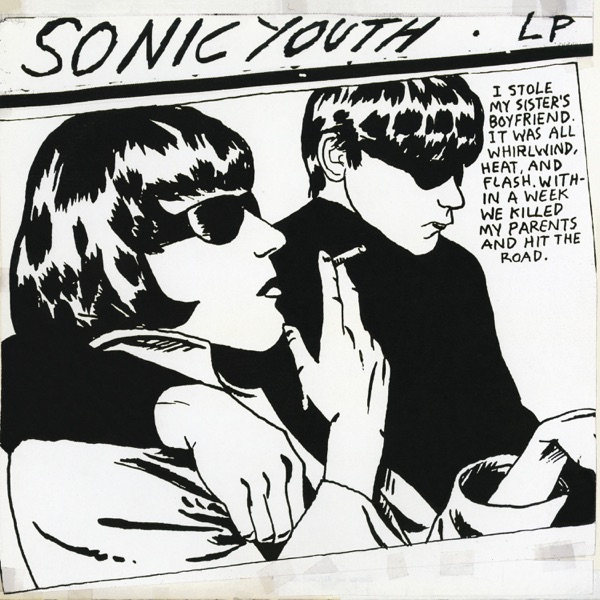
After demos with Don Fleming and J Mascis, the band booked Sorcerer Sound in early 1990, where they hung microphones from the catwalk and isolated Steve Shelley in a drum booth. After the first mixes the engineer Nick Sansano left the project and Ron Saint Germain finished the mix. Costs reached $150,000, five times those of Daydream Nation. Moore played Nirvana's Bleach for the Masterdisk audio engineer Howie Weinberg and said he would be very happy if the record sounded like it. DGC released the album on 26 June 1990 with a cover by Raymond Pettibon.
Jonathan Gold of the Los Angeles Times called the band the Rolling Stones of noise music, and NME's Steve Lamacq concluded that whatever the public taste for American grunge, the record was still a defiant alternative. By December 1990 it had sold over 200,000 copies, more than the label had expected. Geffen's Mark Kates had sent the band to college radio stations and music journalists in the weeks before release.
Basic Information
- Released
- 1990-06-26
- Canon Tier
- Pinnacle
' /%3E%3C/svg%3E)