Why it's in the canon
Bone Machine took the experimental style of Tom Waits's 1980s albums into a cement-floored cellar room at Prairie Sun studios, and it is the first of his albums on which he drums and plays percussion extensively. AllMusic's Steve Huey judged it Waits's most affecting and powerful recording, a record that applied the quirks of those experimental albums to stunningly evocative and often harrowing effect. It won the Grammy for Best Alternative Music Album, which Waits greeted by asking Jim Jarmusch what it was an alternative to, and both Pitchfork and Rolling Stone placed it among the best albums of the 1990s. The Ramones covered one of its songs on their final album.
Bone Machine, released by Island Records on 8 September 1992, was Tom Waits's first studio album in five years, and its sound is rough, stripped down and built around percussion. Waits recorded and produced it at Prairie Sun in Cotati, California, in a cellar room of old cement hatchery rooms. He called it a cement floor and a hot water heater with some good echo, and the studio's head Mark Rennick said Waits gravitated to these echo rooms and created the album's aural landscape. Waits wanted more machinery sounds, reflecting his interest in industrial music.
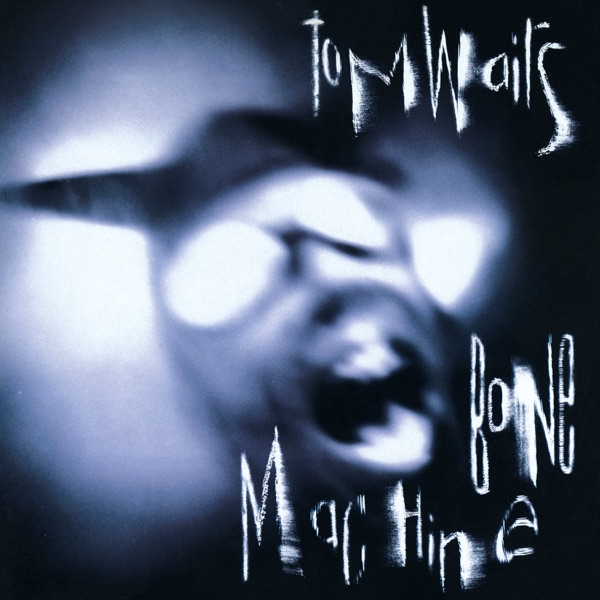
He plays drums and percussion extensively. He said he likes to play drums when he is angry, and described a metal instrument he calls a conundrum, hung with objects he has found and played with a hammer. Les Claypool, the drummer Brain, David Hidalgo and Keith Richards appear as guests, and Richards co-wrote the closing That Feel. The cover shows Waits screaming in a horned skullcap and protective goggles, a freeze frame from Jesse Dylan's video for Goin' Out West; Jim Jarmusch directed the one for I Don't Wanna Grow Up.
The lyrics dwell on death and decay. Huey heard a chilling, primal sound and a fixation with how easily earthly existence can be destroyed. Chris Willman of the Los Angeles Times found that the low-fi, home-studio sounds made all the casual morbidity fun, and Greg Kot of the Chicago Tribune called it rhythmically the most varied and impressive group of songs Waits had written. Entertainment Weekly's Billy Altman found a caring, humanist heart under the hellacious bellows and grotesque arrangements.
Elvis Costello listed it among his essential albums, highlighting A Little Rain and I Don't Wanna Grow Up.
Basic Information
- Released
- 1992-09-08
- Canon Tier
- Landmark


' /%3E%3C/svg%3E)