Why it's in the canon
Davis and the producer Teo Macero made the studio part of the band. Short sections were spliced into long pieces, fragments looped, and tape delays, reverb and echo applied; Pharaoh's Dance contains 19 edits, and its stop-start opening exists only as a construction of studio loops. The rhythm section held two bassists, two to three drummers, two to three electric pianists and a percussionist, all playing at once. Michael Segell wrote in 1978 that the record's success opened the eyes of music-industry executives to the sales potential of jazz-oriented music, and Herbie Hancock's Head Hunters and George Benson's Breezin' followed. Thom Yorke cited it as an influence on OK Computer, and Brian Eno, Aphex Twin, Portishead and Flying Lotus have named it too.
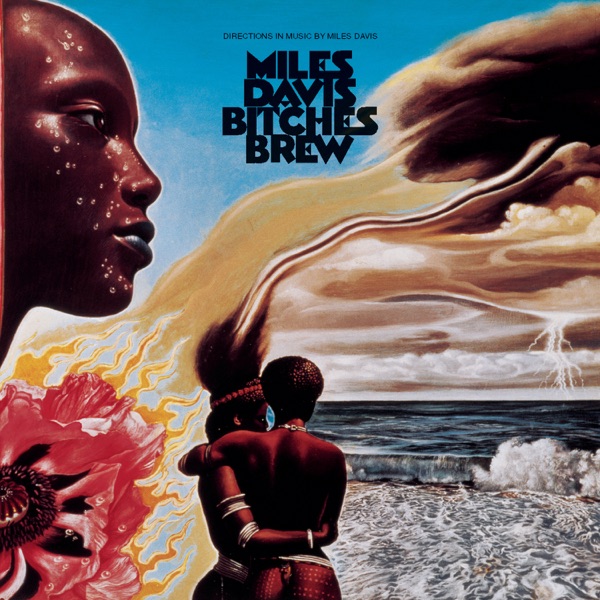
Bitches Brew was recorded live over three days, 19 to 21 August 1969, at Columbia's Studio B in New York, from 10 a.m. to 1 p.m., with the players set up in a half-circle and Davis and Wayne Shorter in the middle. Lenny White recalled no overdubs. Davis had not arranged each piece. He brought a tempo count, a few chords or a hint of melody, and told the band they could play anything as long as they used his chords. On the quieter passages of the title track his voice is audible, snapping the tempo and telling the band to keep it tight.
The music runs in long improvised suites with rubato sections, tempo changes and slow crescendos, over harmonies that move slowly and work modally. Davis's trumpet and Shorter's soprano saxophone are the main voices, with Bennie Maupin's bass clarinet on five tracks. Despite his reputation as a cool, melodic improviser, Davis plays aggressively here, with fast runs in the upper register, and his closing solo on Miles Runs the Voodoo Down stands out; that track alone was released exactly as recorded. Macero assembled the rest: the title track contains 15 edits, with short tape loops. The electric bassist Harvey Brooks had virtually no jazz experience but had worked extensively in rock and pop.
The first response was mixed. Langdon Winner praised its beauty, subtlety and sheer magnificence in Rolling Stone, and Robert Christgau named it the year's best jazz album, although in 1981 he called it a brilliant wash of ideas that leaves an unfocused impression. Donald Fagen said it was just silly, out of tune and bad. The album peaked at number 35 on the Billboard 200, went gold in 1976 and platinum in 2003, and stood at number 94 on Rolling Stone's 2003 list of the 500 greatest albums.
Basic Information
- Released
- 1970-03-30
- Canon Tier
- Pinnacle


' /%3E%3C/svg%3E)